Introduction to Poultry Farming in Pakistan
Poultry farming plays a crucial role in the agricultural landscape of Pakistan, contributing significantly to the national economy. This sector is not only pivotal in supplying protein-rich food to the population but also serves as a primary source of livelihood for millions of people, particularly in rural areas. The poultry industry in Pakistan has experienced substantial growth over the past few decades, with advances in breeding practices, feed efficiency, and health management practices enhancing production capabilities.
The economic contribution of poultry farming to Pakistan’s Gross Domestic Product (GDP) cannot be underestimated. It is widely acknowledged as a vital segment within the agrarian economy, generating substantial revenue and supporting allied industries such as feed production, veterinary services, and processing. Furthermore, poultry farming serves as an employment generator, providing jobs to a wide array of individuals, from small-scale farmers to large enterprises engaged in commercial poultry operations. This aspect of the industry helps alleviate poverty and stimulates economic growth in various regions.
Culturally, poultry farming holds value in Pakistani society, where the consumption of chicken is commonplace across diverse cuisines. This acceptance and demand for poultry products continue to drive the industry forward. However, despite its impressive contributions, the industry faces significant challenges that necessitate attention. Issues such as outdated farming techniques, inadequate biosecurity measures, and a lack of technological integration hinder productivity improvements.
To address these challenges, the modernization and digitization of poultry farming practices are imperative. Implementing digital solutions can enhance operational efficiency, improve data management, and foster better decision-making processes. Thus, there is an urgent need for stakeholders to embrace innovative approaches that can revolutionize the poultry sector in Pakistan, ensuring sustainable growth for the future.
Challenges Faced by Poultry Farmers in Pakistan
Poultry farming in Pakistan is an essential sector contributing significantly to the agricultural economy. However, farmers frequently encounter numerous challenges that hinder growth and profitability. One of the most pressing issues is disease management. Poultry diseases such as avian influenza and Newcastle disease pose a significant threat, often leading to substantial financial losses. Farmers lack access to efficient disease surveillance systems and veterinary care, complicating timely intervention.
Another critical challenge revolves around feed quality. Inconsistent feed quality can substantially affect poultry health and productivity. Many poultry farmers rely on locally sourced feed, which may not meet nutritional standards. This variability in feed can lead to poor growth rates and increased mortality, directly impacting the profitability of the farming operation.
Market access also presents barriers for poultry farmers in Pakistan. A significant number of small-scale farmers face difficulties in reaching larger markets, limiting their ability to sell their products at competitive prices. This issue is compounded by insufficient infrastructure and logistics, making it hard to transport goods efficiently.
Capital investment is another significant hurdle. Poultry farming requires considerable financial resources for equipment, technology, and infrastructure improvements. Many farmers struggle to secure necessary funding, which stifles their ability to upgrade and modernize their operations, allowing larger farms to dominate the market.
Finally, the lack of technological advancement remains a persistent challenge. Many poultry farmers continue to operate using traditional methods, which can lead to inefficiencies and lower productivity. Without embracing digital solutions and modern farming practices, poultry operations may lag in competitiveness compared to other agricultural sectors.
The Importance of Digital Transformation in Poultry Farming
Digital transformation is increasingly recognized as a crucial factor in modernizing and improving the poultry farming sector in Pakistan. As the demand for poultry products continues to rise, farmers face the challenge of efficiently managing their operations while maintaining productivity. Implementing digital technologies can alleviate many of these challenges by streamlining operations and enhancing data collection and analysis.
One significant advantage of digitization is the ability to collect accurate data across various aspects of farming operations. By utilizing digital tools such as sensors and IoT devices, poultry farmers can monitor environmental conditions, track feed consumption, and analyze livestock health in real time. This level of data-driven decision-making allows farmers to optimize resources and minimize waste, ultimately leading to improved productivity and profitability.
Moreover, digital transformation improves supply chain management by enabling better communication and transparency. Through digital platforms, farmers can connect with suppliers, distributors, and retailers more effectively, facilitating timely deliveries and reducing the likelihood of stock shortages. This level of coordination not only enhances operational efficiency but also helps in responding swiftly to market demands.
Additionally, the adoption of digital technologies can bolster biosecurity measures, an essential aspect of poultry farming. With digital tools, farmers can implement tracking systems to monitor the health status of their flocks, ensuring that any potential outbreaks are identified and addressed promptly. This proactive approach not only safeguards animal welfare but also protects consumers and enhances overall public health.
In conclusion, the importance of digital transformation in poultry farming cannot be overstated. By embracing these technologies, farmers can streamline their operations, improve their supply chains, and ultimately achieve higher levels of productivity, ensuring the sustainability and growth of the poultry sector in Pakistan.
Technological Solutions for Poultry Farming
In the evolving landscape of poultry farming, numerous technological solutions have emerged that can significantly enhance performance and productivity. These innovations are particularly relevant in addressing the various challenges faced by farmers in Pakistan, such as disease management, waste reduction, and resource optimization.
One notable advancement is farm management software, which provides poultry farmers with integrated solutions to manage their operations effectively. These software programs allow for the tracking of feed consumption, health monitoring, and inventory management, thereby streamlining daily tasks. With the ability to collect and analyze data, farmers can make informed decisions that improve the overall health of the flock and the efficiency of farm operations.
Automation tools also play a vital role in contemporary poultry farming practices. Automated feeding systems ensure that birds receive adequate nutrition without the inconsistencies often associated with manual feeding. Similarly, climate control systems can maintain optimal conditions within poultry houses, thereby reducing stress on the birds and minimizing health risks. These automated solutions not only save time and labor but also enhance the welfare of the poultry.
Additionally, data analytics has proven to be an invaluable resource in the poultry sector. By leveraging big data, farmers can analyze trends and patterns in their operations, leading to improved decision-making. For instance, data analytics can highlight optimal breeding practices, feeding regimens, and disease outbreaks, allowing for proactive measures to be taken. Through the application of these analytical methods, farmers can enhance productivity and reduce costs significantly.
In conclusion, the integration of advanced technological solutions in poultry farming offers a comprehensive approach to managing challenges faced by the industry. By embracing innovations such as farm management software, automation tools, and data analytics, poultry farmers in Pakistan can pave the way for a sustainable and successful future.
Introducing Poultry Pro: A Comprehensive Solution
Poultry Pro is an innovative digital platform designed specifically to meet the needs of poultry farmers in Pakistan. This comprehensive solution provides a suite of tools that streamline operations and enhance productivity, addressing several challenges faced in the poultry farming industry. By incorporating advanced technology, Poultry Pro empowers farmers to better manage their resources and optimize their production processes.
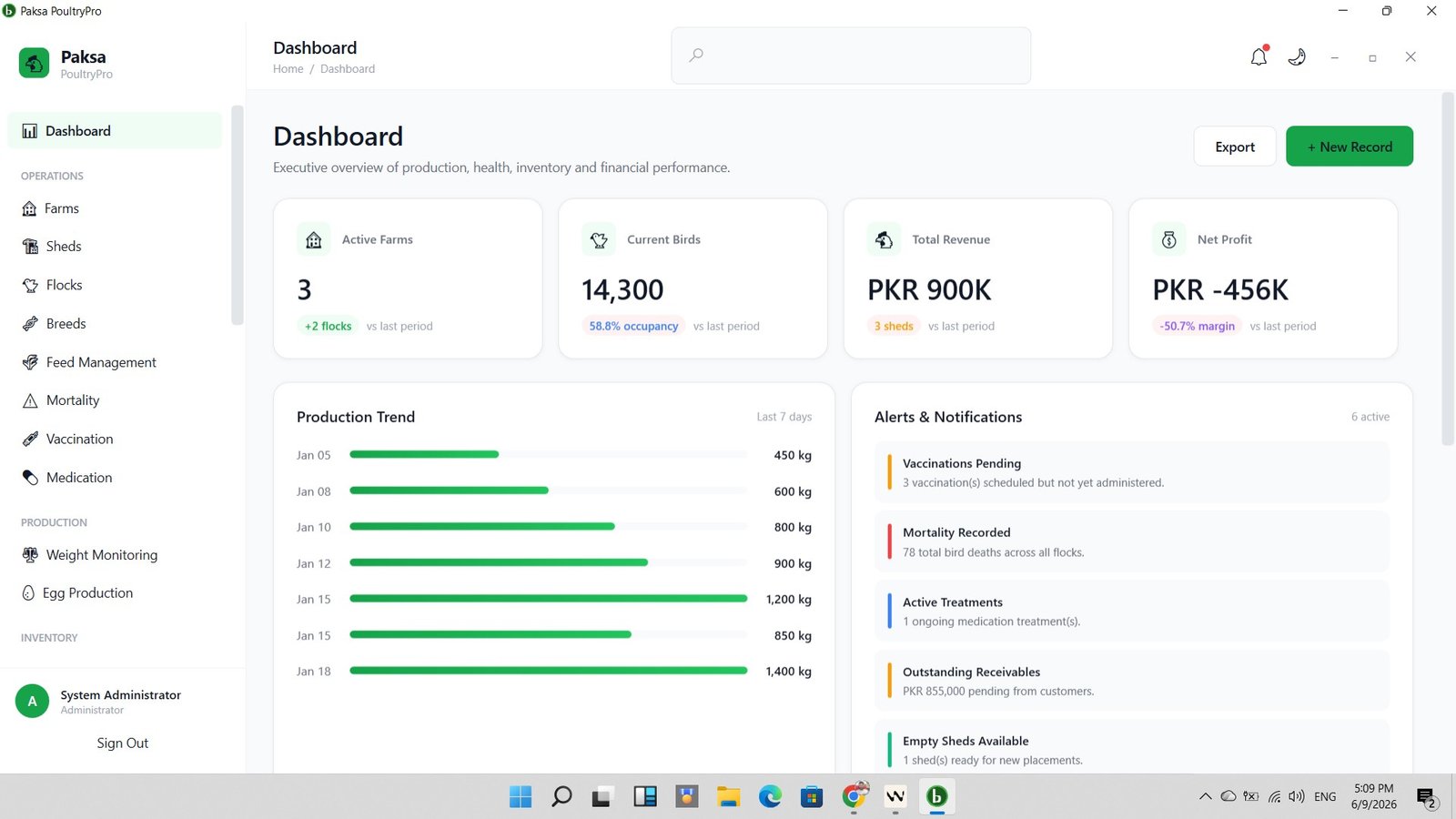
One of the standout features of Poultry Pro is its user-friendly interface, which allows farmers, regardless of their tech-savviness, to navigate the application with ease. The dashboard presents real-time data and insights that help in monitoring flock health, feed consumption, and overall growth rates. This timely information is crucial for making well-informed decisions that can positively impact productivity and profitability.
With Poultry Pro, farmers can easily schedule vaccinations, track medication dosages, and maintain records of health checks, ensuring that their flocks are well cared for. Additionally, a built-in inventory management system allows users to manage feed and supplies efficiently, reducing waste and operational costs. This feature is particularly beneficial in a region like Pakistan, where resource management is vital to sustainability.
The platform also facilitates communication between farmers and suppliers, enabling seamless transactions and fostering better relationships within the agricultural community. As a result, farmers can gain access to quality inputs and services, contributing to overall production improvement.
In essence, Poultry Pro emerges as a holistic solution, offering features that cater to both the operational and managerial aspects of poultry farming. By leveraging digital technology, Poultry Pro is positioning itself as a key ally for poultry farmers in Pakistan, helping them to navigate the complexities of modern agriculture with confidence.
Case Studies: Successful Implementation of Poultry Pro
Digitizing poultry farming through solutions like Poultry Pro has proven to yield significant improvements in operational efficiency and productivity. One notable example comes from a mid-sized poultry farm located in Punjab, Pakistan. Faced with escalating operational costs and challenges in monitoring flock health, the farm management decided to implement Poultry Pro. The initial phase included training staff to effectively utilize the software, which involved integrating various aspects of production management, from feed optimization to vaccination schedules.
During the implementation, the farm encountered several challenges, including resistance from older employees unfamiliar with digital technology and the need for a robust internet connection in rural areas. However, with ongoing training sessions and gradual transitions to digital practices, the staff became more adept at using the platform, which allowed for better livestock tracking and data-driven decision-making.
The results were transformative. Within a few months of adopting Poultry Pro, the farm reported a 20% increase in productivity. The real-time data access allowed for immediate responses to health issues, reducing mortality rates significantly. Moreover, the digitization of feeding schedules led to a more efficient use of resources, ultimately minimizing waste and lowering costs.
Another compelling case is from a large-scale poultry operation in Sindh province, which faced difficulties in managing its extensive supply chains. By implementing Poultry Pro, the farm streamlined its inventory management, enabling better monitoring of feed supplies and breeding stock. This proactive management helped avoid shortages and ensured a continuous supply of high-quality products to the market. Following the transformation, the farm not only stabilized its operations but also achieved a remarkable 15% increase in profit margins.
These case studies illustrate how utilizing Poultry Pro can effectively address common challenges in poultry farming, providing measurable improvements in efficiency and profitability while fostering a culture of innovation within the industry.
User Testimonials: Farmers Speak
Digitization in poultry farming has brought transformative changes to the lives of many farmers in Pakistan. One such farmer, Ahmad Khan from Punjab, shared his experience with Poultry Pro, stating that the digital platform has streamlined his daily operations. “Before adopting this technology, I struggled with record-keeping and managing feed stock. Now, I can monitor every aspect of my farm from my smartphone, which has greatly reduced my workload and improved my productivity,” he noted.
Another farmer, Fatima Baloch, expressed her satisfaction with the solution, emphasizing the innovative features that Poultry Pro offers. “The data analytics tools have enabled me to make informed decisions about my flock’s health and growth patterns. I can identify problems quickly and address them effectively, which has increased my yields significantly,” she explained. Her narrative is a testament to how digital solutions can enhance operational efficiency and profitability in poultry farming.
Similarly, Jamil Ahmed, who manages a larger farm operation, shared how digitization has impacted his bottom line. “With the help of Poultry Pro, I’ve been able to reduce feed wastage by over 20%. The app helps me track food consumption accurately, allowing me to make timely adjustments to avoid overfeeding. It’s not just about saving costs; it’s also about ensuring my chickens are healthy and thriving,” said Jamil.
These testimonials highlight the practical benefits and transformative impacts of integrating digitization in poultry farming. Farmers like Ahmad, Fatima, and Jamil have shared their concerns and challenges but have all found common ground in the substantial improvements that Poultry Pro has brought to their operations. The collective experiences emphasize that transitioning to a digital environment is not merely a trend but a necessity for sustainable growth and success in the poultry industry in Pakistan.
Future of Poultry Farming in Pakistan with Digital Solutions
The poultry farming industry in Pakistan stands on the brink of transformative change, driven largely by the advancement of digital solutions. As farms begin to adopt emerging technologies, the prospects for enhanced efficiency and productivity become increasingly evident. Digitalization is paving the way for smarter farming practices that can optimize resource management, improve animal health, and increase overall output.
One of the most significant advancements reshaping this industry is the adoption of IoT (Internet of Things) devices. These smart devices allow farmers to monitor real-time data concerning feeding patterns, temperature control, and flock health, enabling proactive management decisions. As IoT applications become more widespread, poultry farmers in Pakistan can expect reductions in operational costs and improvements in product quality. Furthermore, incorporating data analytics will optimize feed formulations and enhance the breeding process, fostering healthier poultry.
Additionally, automation in poultry farming operations, such as automated feeding and egg collection systems, continues to gain traction. These technologies not only reduce labor requirements but also minimize human error, allowing for consistent management practices. With the gradual incorporation of artificial intelligence (AI), predictive analytics can assist farmers in forecasting market needs and adjusting production strategies accordingly. This versatility is crucial in navigating the ever-fluctuating demand within the industry.
Industry trends indicate a shift towards sustainable practices facilitated by digital solutions, aligning with global standards for environmentally friendly poultry farming. Enhanced traceability throughout the supply chain, supported by blockchain technology, will ensure that consumers have access to trustworthy information regarding the origin and quality of poultry products. By investing in these innovative digital solutions, the future of poultry farming in Pakistan appears promising, fostering growth opportunities that could reinvigorate this vital sector of the economy.
Conclusion and Call to Action
In conclusion, the digitization of poultry farming in Pakistan presents a remarkable opportunity to enhance productivity and profitability across the industry. The traditional methods employed in poultry farming often lead to inefficiencies and hinder the growth potential of farmers. However, by embracing digital solutions, farmers can streamline their operations, gain valuable insights, and make data-driven decisions that ultimately bolster their yields.
Throughout this blog post, we have explored the various challenges that poultry farmers face, including disease management, feed optimization, and market fluctuations. Each of these challenges can be effectively addressed through the integration of technology. Digital solutions, such as Poultry Pro, offer tools for better monitoring of flocks, real-time data analytics, and improved management practices, all of which contribute to healthier birds and increased output.
Furthermore, the importance of training and support cannot be overstated. As farmers venture into the digital realm, access to proper training sessions and resources will ensure that they can fully harness the benefits of technology. By fostering a culture of learning and adaptation, the poultry sector can thrive in an increasingly competitive market.
We encourage all poultry farmers to consider adopting digital tools that can revolutionize their farming practices. Engaging with solutions like Poultry Pro can help in navigating the complexities of modern poultry farming, making it essential for long-term success. Embrace the future of poultry farming today and take the necessary steps towards improving productivity and profitability through digitization.